Pottery
Marks moved onto vessels, tools, and everyday objects. Decoration became part of daily life, not just cave walls.
Skadoodle · A Living Timeline
The History of the Doodle
Before pencils, before paper, before notebooks — people were already making marks. People have always doodled. Now it's your turn.

Chatty
Your excited host & emotional guide
“Everyone thinks doodling started in school notebooks. Nope. Grab your imagination. We're going back over 70,000 years.”
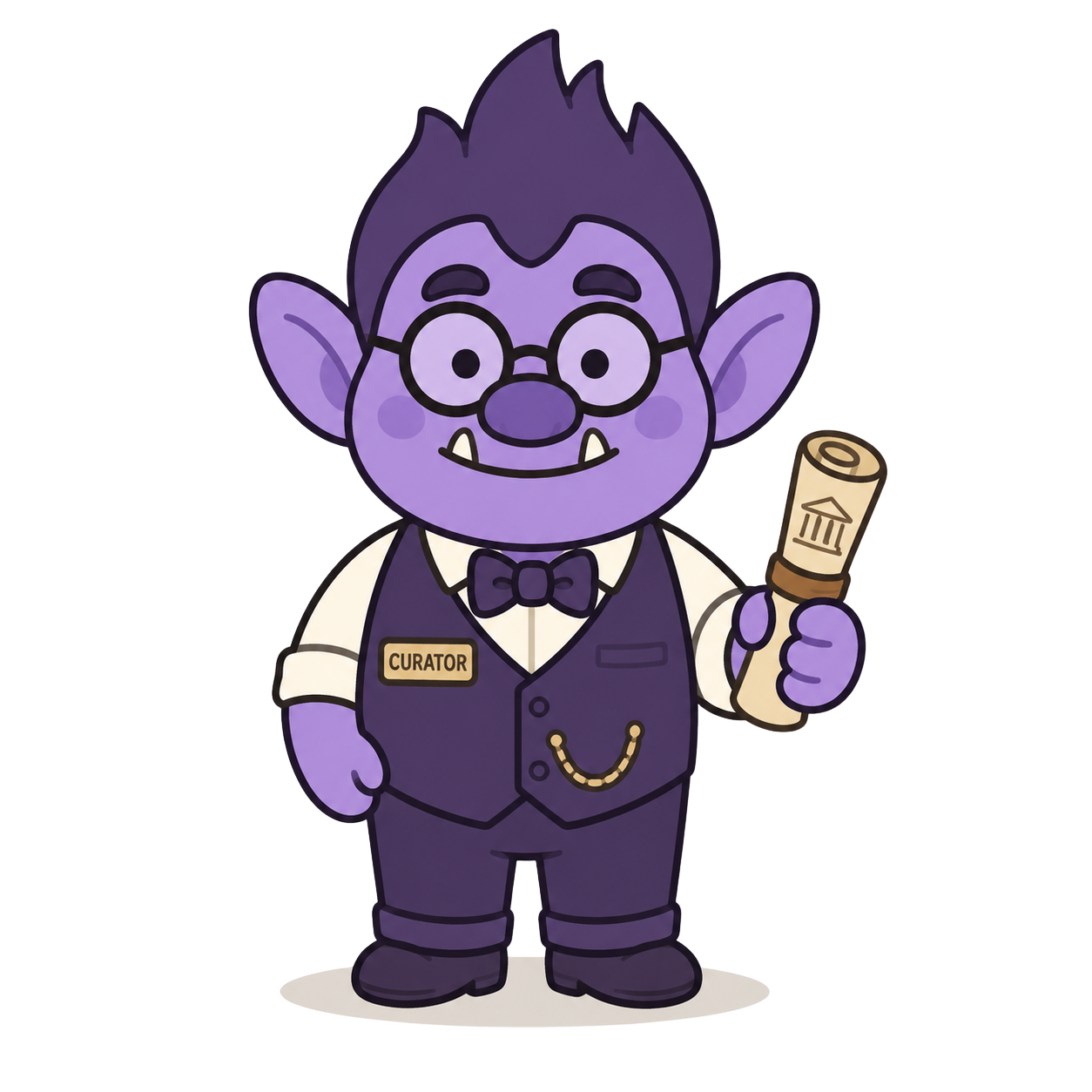
The Curator Doodle
Your calm fact guide & historian
“This hall follows some of the earliest known examples of human art and marking. Our understanding changes as new discoveries are dated — this hall reflects the best information currently available.”
Tap any stop to jump to that room, or use Begin the Journey to walk through in order.
Room 1 of 9
After the cave walls came a rush of new tools…
After cave walls, human marks did not disappear. They moved. Onto clay, paper, margins, notebooks, screens, and anything else people could reach.
Marks moved onto vessels, tools, and everyday objects. Decoration became part of daily life, not just cave walls.
Drawings, symbols, and written marks could now travel with stories, laws, records, and beliefs.
Margins became places for decoration, symbols, notes, sketches, and small visual surprises.
Artists and inventors used pages to collect studies, experiments, unfinished ideas, and quick observations.
Doodles became part of learning, boredom, imagination, and the everyday life of students.
Quick ideas could appear anywhere. A small scrap of paper could hold the beginning of an invention, joke, song, or sketch.
Marks became shared, temporary, erasable, and collaborative. People could think out loud together.
Digital tools let drawings be saved, edited, copied, colored, and shared instantly.
Now a doodle can be made with a finger and sent around the world in seconds.
Why this matters: The tools changed, but the urge to make marks, remember things, tell stories, and imagine stayed the same.
Chatty
“Different tools. Same imagination.”
The Curator Doodle
“The tools changed. The human impulse to make marks stayed.”
You are part of a story that started long before paper, pencils, or classrooms. Every sketch, scribble, and doodle begins with the same brave step: making a mark. Your doodle continues the same human instinct to make marks, tell stories, and create.
Every image in this hall lists its credit and license. For version 1, images are placeholders until reuse rights are confirmed. Missing credits are never hidden.
Archaeology changes as new discoveries are made and dating methods improve. The Historical Hall is designed to be updated as new evidence becomes available.
Some discoveries — especially early hand-stencil dates and possible Neanderthal attribution (see the Maltravieso Cave room) — remain debated by researchers. Where a fact is disputed or may change, this hall says so on the exhibit itself.